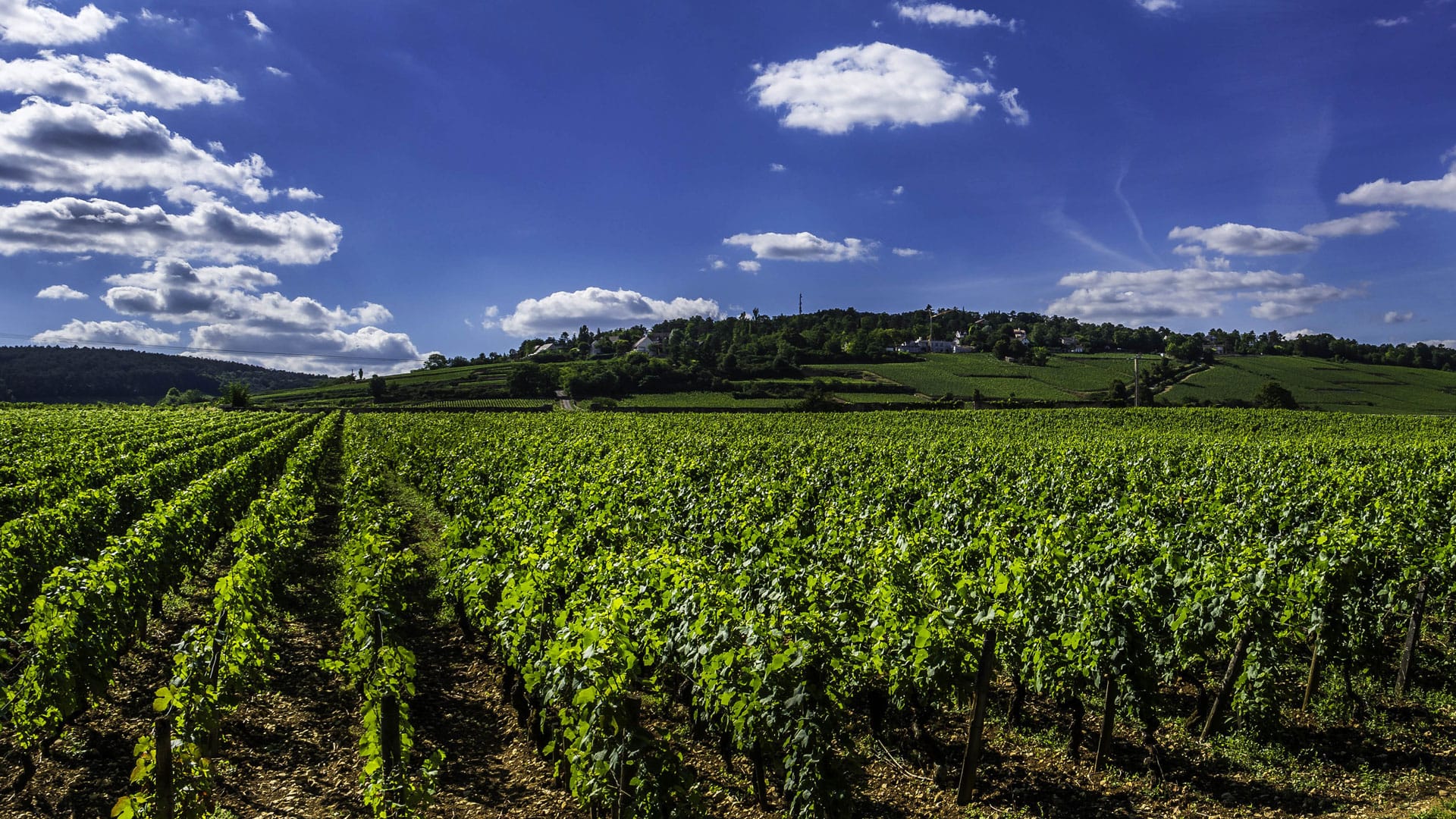
Burgundy Discover the wine region and its appellations
Presentation
Located in east-central France, Burgundy is one of the most prestigious and famous wine regions in the world. Stretching across a narrow 250-kilometer stretch from Dijon to Mâcon, Burgundy is a true oenological gem, renowned for its exceptionally high-quality red and white wines. From the Côte de Nuits to the Côte de Beaune, including the famous Chablis and Mâconnais appellations, Burgundy offers a diversity of landscapes and wines that make it a must-see destination for wine lovers. Thanks to its temperate continental climate and rich soils, Burgundy produces wines of unparalleled finesse and complexity.
A Thousand-Year-Old Wine History
From ancient origins to monastic influence
Burgundy's winemaking history dates back to ancient times, when the first vines were planted by the Romans. However, it was during the Middle Ages that viticulture experienced considerable growth, particularly thanks to the influence of Cistercian and Benedictine monks. They played a crucial role in the development of winemaking techniques and the expansion of vineyards. Burgundy wines quickly gained international renown, appreciated at the courts of the French kings and throughout Europe.
A cultural and architectural heritage
Burgundy is also rich in exceptional cultural and architectural heritage. The abbeys of Cîteaux and Cluny, as well as wine châteaux such as the Château du Clos de Vougeot, bear witness to the region's prestigious history. The picturesque villages, with their stone houses and Romanesque churches, add to Burgundy's charm.
Lands with ancestral traditions
Each Burgundy terroir has its own distinct identity, shaped by centuries of winemaking tradition. From the prestigious vineyards of the Côte de Nuits to the sun-drenched hillsides of the Côte de Beaune, the region is dotted with wine estates where winemakers perpetuate ancestral expertise. Burgundy wines embody the historical and cultural richness that makes them so unique.
An Exceptional Terroir: Diversity and Finesse
A temperate continental climate
Burgundy's climate is a major asset for viticulture. The region enjoys a temperate continental climate, with warm summers and cold winters. This climatic diversity allows for the cultivation of numerous grape varieties, from Pinot Noir to Chardonnay, which thrive in these lands.
A Varied Geology for Unique Wines
Burgundy is characterized by a geological diversity that gives its wines unique characteristics. The limestone soils of the Côte de Nuits and Côte de Beaune, the clay-limestone soils of Chablis, and the granite soils of the Mâconnais are all examples of this geological richness. This variety of soils contributes to the expression of multiple facets in the wines, whether in terms of structure, fruitiness, or minerality.
Emblematic Grape Varieties
Burgundy's grape varieties reflect the region's geographical and climatic diversity. Pinot Noir is the king grape variety of Burgundy red wines, producing elegant and complex wines. Chardonnay is emblematic of white wines, offering dry and aromatic wines, as well as world-renowned wines, such as Montrachet.