Alsace Discover the wine region and its appellations
Presentation
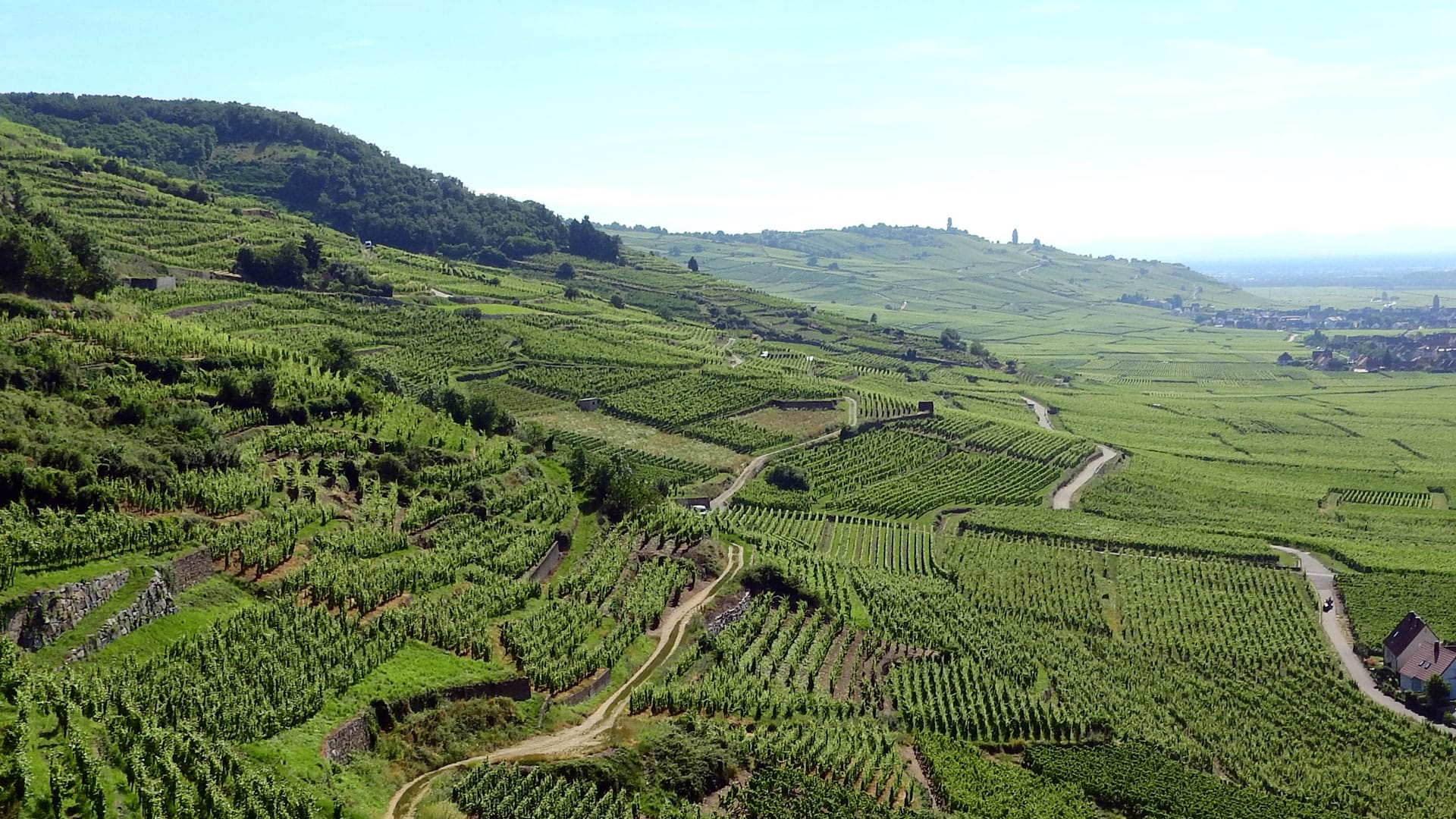
Nestled between the Vosges mountains and the Rhine, Alsace is an iconic wine-growing region in eastern France. Stretching across a narrow strip of 170 kilometres, this region offers a diversity of landscapes and wines that make it a true oenological gem. From Colmar to Strasbourg, passing through the charming villages of Riquewihr and Eguisheim, Alsace invites you on a unique sensory journey. Thanks to its semi-continental climate and rich soils, Alsace produces white wines of great finesse, ranging from dry and aromatic to sweet and liqueur-like.
A Winemaking History Steeped in Time
From Medieval Origins to Monastic Influence
The winemaking history of Alsace dates back to the Middle Ages, when Benedictine and Cistercian monks played a crucial role in the development of viticulture. By planting vines and perfecting winemaking techniques, they left a lasting legacy. The Germanic influence also left its mark on the region, contributing to the diversity of its winemaking heritage.
A Cultural and Architectural Heritage
Alsace boasts an exceptional cultural and architectural heritage. The picturesque villages, with their half-timbered houses and cobbled streets, bear witness to a rich history. Castles and abbeys, such as the Château du Haut-Kœnigsbourg, contributed to the renown of Alsatian wines, appreciated at the French court and throughout Europe.
Terroirs with Unique Stories
Each terroir in Alsace has its own unique history and characteristics. From the terraced vineyards of Thann to the rolling hills of Ribeauvillé, the region is dotted with villages and wine estates where winegrowers perpetuate their ancestral know-how. Alsace wines embody the historical and cultural richness that makes them so distinctive.
An Exceptional Terroir: Diversity and Richness
A Climate Favorable to Viticulture
The climate of Alsace is a major asset for viticulture. The region enjoys a semi-continental climate, with hot summers and cold winters. This climatic diversity allows for the cultivation of numerous grape varieties, from Riesling to Gewurztraminer, including Pinot Gris. Alsace also benefits from a microclimate favorable to the production of sweet and liqueur wines, thanks to the protective influence of the Vosges Mountains.
A Varied Geology for Unique Wines
Alsace is marked by a geological diversity that gives its wines unique characteristics. The granite soils of the Thann vineyards, the limestone soils of Ribeauvillé, and the clay-limestone soils of Colmar are all examples of this geological richness. This variety of soils contributes to the expression of multiple facets in the wines, whether in terms of fruitiness, structure, or minerality.
Emblematic Grape Varieties
The grape varieties of Alsace reflect the region's geographical and climatic diversity. Riesling, emblematic of Alsace, is dry and mineral, while Gewurztraminer offers wines with floral and spicy aromas. Pinot Gris, also famous, produces rich and opulent wines. Alsace is also renowned for its sweet and liqueur wines, made mainly from Pinot Gris and Gewurztraminer, which have acquired international renown. Riesling, emblematic of Alsace, is dry and mineral, while the Gewurztraminer offers wines with floral and spicy aromas. Pinot Gris, Alsace, also famous, produces rich and opulent wines. It is also renowned for its sweet and dessert wines, made primarily from the... Pinot Gris and the Gewurztraminer, which have acquired international renown.